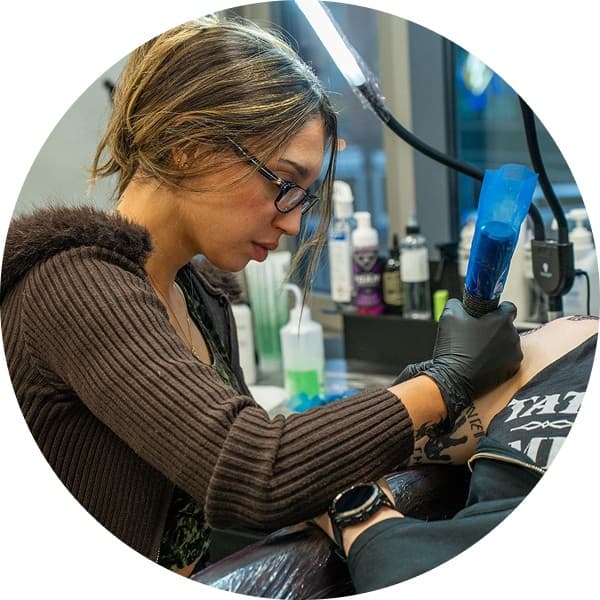
Tattooing is leveling up: how to stay professional and inspection-ready as regulations tighten
Inspections are less stressful when your paperwork is already in order. This guide covers what inspectors commonly ask tattoo studios to show - consent records, sterilisation logs, ink and needle traceability, age checks - and gives you a practical pre-inspection checklist. Rules differ by country, state and city, so use it as a starting point and confirm the details with your local health authority.
Tattooing has become a mainstream, regulated trade in most places. Licensing, health inspections, ink rules and age requirements are stricter than they were ten years ago, and in many regions they keep moving. For a studio, that mostly shows up in one place: the day an inspector walks in and asks to see your records.
This post focuses on that moment. What do inspectors commonly look at, how should you organise your documentation so you can find it quickly, and what can you check in the week before an inspection? For how long to keep records and how GDPR applies, see protect your studio and win back time with digital consent.
One important caveat before we start: rules vary a lot by country, state, province and even city. What follows is a general picture of what inspectors often ask about, not a legal checklist for your area. Your local health authority or licensing body is the source of truth, and many of them publish their inspection criteria online. Read them.
Why inspections feel stricter than they used to
A few trends push in the same direction:
- More formal licensing. Many regions license both the premises and the individual artist, with renewals tied to inspections or training.
- Ink regulation. In the EU, tattoo and permanent make-up inks have been restricted under the REACH chemicals regulation since January 2022, which raised the profile of ink labelling and traceability. Other regions have their own rules or are reviewing them.
- Age verification. Minimum ages and guardian-consent rules are enforced more actively, and inspectors increasingly ask how you verify age, not just whether you do.
- Client expectations. Clients compare studios online. A clean intake process and a professional signed record are part of how a studio is judged.
None of this is bad news for a well-run studio. It mostly rewards the habits good artists already have, as long as those habits are written down.
What inspectors commonly ask to see
The exact list depends on your jurisdiction, but these categories come up again and again.
| Area | What is often requested | Typical gap |
|---|---|---|
| Client consent | Signed consent for each procedure, with date and client details | Missing signatures, unreadable handwriting, misfiled forms |
| Health disclosures | Evidence that clients were asked relevant health questions | Questions skipped or answered with a single tick |
| Age checks | Proof that age was verified, plus guardian consent where required | No record of which ID was checked |
| Sterilisation | Autoclave logs, indicator or spore test results, cleaning schedules | Logs not kept up to date, test results missing |
| Ink and needles | Brand, colour and batch of inks used; needle batch and expiry | No link between a client and the batch used |
| Premises and staff | Licences, training certificates, waste disposal contracts | Certificates expired or stored at home |
Consent records
Inspectors generally want to see that every client signed a consent form before the procedure, that it covered the relevant risks, and that it can be matched to a specific date and artist. A signed PDF per session that includes the client's name, date of birth, signature, date and artist makes this easy to show.
Sterilisation logs
This is usually separate from client paperwork, but it is often the first thing checked. Keep autoclave cycle logs, indicator results and any external spore testing in one place, with dates. If you use single-use pre-sterilised needles and tubes, keep a record of the batch and expiry.
Ink and needle batch traceability
If an ink batch is recalled or a client has a reaction, can you tell which clients received that batch? Some inspectors ask exactly that. The answer depends on logging ink brand, colour and batch number per session, and ideally needle batch and expiry too. We go deeper into this in the future standard of tattoo studios: digital consent and ink passports.
Age checks and guardian consent
Some jurisdictions prohibit tattooing minors entirely; others allow it with guardian consent, sometimes only in person and with specific documents. Find out which applies to you, then make sure your records show both the age check and, where relevant, the guardian's details and signature.
How to organise records so you can find them in minutes
The worst inspection is the one where you know the record exists but cannot find it. A few organising principles help:
- One record per session, not per client. A returning client should sign a new consent for each procedure, so health answers are current.
- Consistent naming and dates. Whether paper or digital, records should be findable by client name and by date.
- Keep business records at the studio. Licences, training certificates and waste contracts should be on-site or reachable from a studio device.
- Make exports routine. If you use digital consent, practise exporting a date range before you actually need it.
In Wavrr, every signed waiver is stored as a PDF in the client's consent history, and you can bulk export waivers and ink passports. The steps are in export records for an inspection or audit. If you need a single client, find a client's consent history shows every form they have signed.
A pre-inspection checklist
Run through this the week before an announced inspection, or once a quarter if inspections are unannounced where you work.
- Studio and artist licences are current and displayed where required.
- Every recent session has a signed consent form with client name, date, artist and signature.
- Health questions on your template match current guidance from your health authority.
- Age verification is recorded, and guardian consent is on file for every minor (where minors are permitted at all).
- Autoclave logs and test results are complete and dated.
- Ink brand, colour and batch numbers are logged per session.
- Needle batch numbers and expiry dates are recorded or retrievable.
- You can export a date range of records within a few minutes.
- Aftercare instructions given to clients are documented.
- Staff know where everything is if you are not in the studio.
If something is missing, fix the process going forward and note what happened. A studio that is honest about a gap and has already corrected it is in a better position than one that improvises on the day.
Where digital consent helps, and where it does not
Moving consent online fixes the most common paperwork problems: unreadable handwriting, missing fields, lost forms and slow retrieval. In Wavrr, health questions are built into the template, you can ask a client for photo ID, and the minors and guardian consent settings put the guardian's name and second signature on the PDF. Ink registration and ink passports cover the batch side.
It does not replace your sterilisation routine, your licences or your hygiene practice. A digital consent tool is one part of being inspection-ready, not all of it. Aftercare records that log inks and needles per appointment are also being rolled out in Wavrr, which will connect more of the traceability picture to the signed waiver.
FAQ
Do inspectors accept digital consent forms instead of paper?
In many places, yes, as long as the record is complete, signed and retrievable. Some authorities have specific requirements about format or storage, so check with your local health authority if you are unsure.
How far back will an inspector look?
It varies. Some look at recent sessions, others sample across a longer period. Keep records for at least as long as your local rules and your insurer require, and make sure older records are as easy to find as recent ones.
Do I need to record ink batch numbers?
Some regions require it and many recommend it. Even where it is not mandatory, batch logging is what makes it possible to trace clients after a reaction or a product recall.
What if my area has no specific tattoo regulations?
Some areas have very light rules. Good records still help with insurers and in disputes, and rules can change quickly. Treat the checklist above as good practice rather than a legal minimum.
What is the fastest way to show an inspector a specific client's record?
Search the client's consent history and open or download the signed PDF. For a larger sample, follow the export guide and hand over the export.
Related guides
- Exports for inspections and auditsExport signed consent records in bulk when an inspector, insurer or auditor asks.
- Minors and guardian consentSet a minimum age and a guardian threshold per template.
- Ink passports and traceabilityWhat to log per session so you can trace inks after a reaction or recall.
- Tattoo consent form softwareDigital consent forms built for tattoo studios, with signed PDFs and exports.
Keep reading.
- Booking Software vs Consent Software: How Tattoo Studios Build Their 2026-2027 StackBooking software and consent software solve different problems. This guide explains the job of each layer, when an all-in-one suite makes sense, when to combine focused tools, and example stacks for solo artists, small studios and multi-artist shops.Read article
- Wavrr vs Porter: All-in-One Tattoo Booking Suite or a Focused Consent Layer?Porter is an all-in-one tattoo booking and shop suite. Wavrr is a focused consent, waiver and ink passport layer. Here is how they differ, what each costs as of October 2026, and when it makes sense to run Wavrr next to Porter or any other booking tool.Read article